




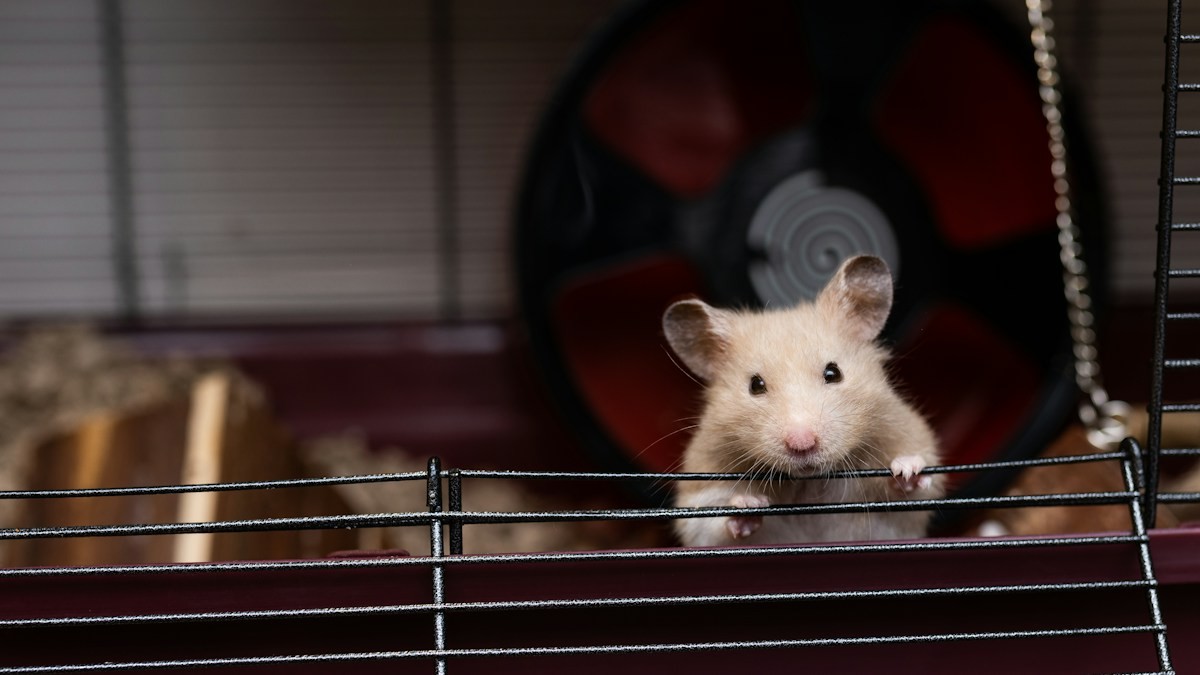
Walk into virtually any big-box commercial pet store, and you will see shelves lined with brightly colored plastic cages featuring tiny modular compartments, twisting exterior plastic tubes, and 6-inch plastic running wheels, marketed with smiling cartoons as ‘the perfect hamster home.’ In reality, these commercial cages are cruel, cramped confinement cells. For decades, outdated pet industry marketing has normalized keeping wide-ranging solitary burrowers in spaces smaller than a shoebox.
In their native wild arid steppes and deserts across Syria, Kazakhstan, and Mongolia, wild hamsters maintain vast subterranean burrow systems extending up to three feet beneath the earth, comprising multiple interconnected chambers for food caching, sleeping, and sanitation. At night, wild hamsters run between 5 and 9 kilometers foraging across expansive territories. Confining these animals to tiny, shallow cages triggers extreme stress behaviors: frantic bar-biting, climbing cage ceilings (‘monkey barring’), aggression, and severe spinal deformities.
Backed by modern German veterinary welfare standards (TVT guidelines), this definitive habitat guide outlines the science of species-appropriate hamster care. You will discover why 775 square inches of unbroken floor space is the absolute minimum requirement, understand how 10 inches of compressed bedding unlocks natural subterranean burrowing, and learn why upright wheel sizing is vital to protect spinal alignment.
Enclosure Dimensions: Unbroken Floor Space vs. Plastic Levels
Hamsters are ground-dwelling burrowers, not arboreal tree-climbers. Vertical height and connected plastic tubes do NOT count toward habitat requirements.
The 775+ Square Inch Unbroken Floor Space Standard
Scientific research in animal welfare proves that hamsters housed in enclosures under 100cm × 50cm (775 square inches of continuous unbroken floor space) exhibit chronic stereotypic bar-chewing and stress hormone elevations.
Levels and shelves added to small cages do not substitute for continuous floor space. Hamsters have poor depth perception; high vertical cages without deep bedding present severe fall and fracture risks.
Affordable DIY Habitat Alternatives: Tanks and Bin Cages
Commercial glass aquariums (40-gallon breeder or 75-gallon tanks) make magnificent, escape-proof hamster habitats with crystal-clear visibility. Alternatively, custom DIY enclosures constructed from Ikea Pax or Linnmon furniture provide over 1,000 square inches of floor space at a fraction of commercial costs.
For budget-conscious owners, a 50-gallon heavy-duty storage plastic bin with wire mesh installed in the lid offers a humane habitat for under $40.
Bedding Depth and Safe Substrates for Burrowing
Hamsters do not sleep on top of bedding; they sleep inside complex subterranean tunnel networks engineered beneath the surface.
The 8-to-12 Inch Depth Rule
Provide a minimum of 8 to 10 inches (20 to 25 cm) of packed bedding for dwarf hamsters, and at least 10 to 12 inches (25 to 30 cm) for Syrian hamsters. Compress the bedding firmly with your hands when adding it.
Layering soft orchard grass or Timothy hay between layers of paper bedding acts like internal rebar, allowing the hamster’s dug tunnels and sleep chambers to hold their structural shape without collapsing.
Safe Bedding vs. Toxic Wood Shavings
Use unscented, dust-extracted paper-based bedding (such as Kaytee Clean & Cozy or Carefresh) or kiln-dried aspen shavings. Never use pine or cedar wood shavings: softwoods release volatile aromatic hydrocarbons (phenols) that cause severe liver damage and respiratory failure.
Strictly ban synthetic polyester ‘cotton fluff’ bedding, which wraps around tiny limbs like a tourniquet and causes fatal stomach blockages when ingested.
Upright Running Wheels: Sizing to Prevent Spinal Lordosis
A running wheel is not an optional toy; it is an essential biomechanical organ of locomotion for a captive hamster.
Preventing Painful Spinal Lordosis
When a hamster runs on an undersized wheel (such as standard 6.5-inch pet store wheels), their spine is forced into a severe, unnatural backward arch (spinal lordosis). Over months, running in this bent posture causes irreversible spinal disc compression, chronic back pain, and premature arthritis.
When running at full sprint, the hamster’s back must remain completely straight and horizontal, with their neck relaxed and head parallel to the ground.
Wheel Dimensions by Species
Syrian hamsters require an upright wheel with a minimum diameter of 11 to 12 inches (28 to 30 cm). Large female Syrians frequently require 12.5-to-13-inch wheels (such as the Niteangel Super-Silent Wheel).
Dwarf hamsters require an 8-to-10-inch (20 to 25 cm) wheel. Wheels must feature a solid running surface—never wire rungs or mesh, which cause painful ‘bumblefoot’ ulcerative pododermatitis.
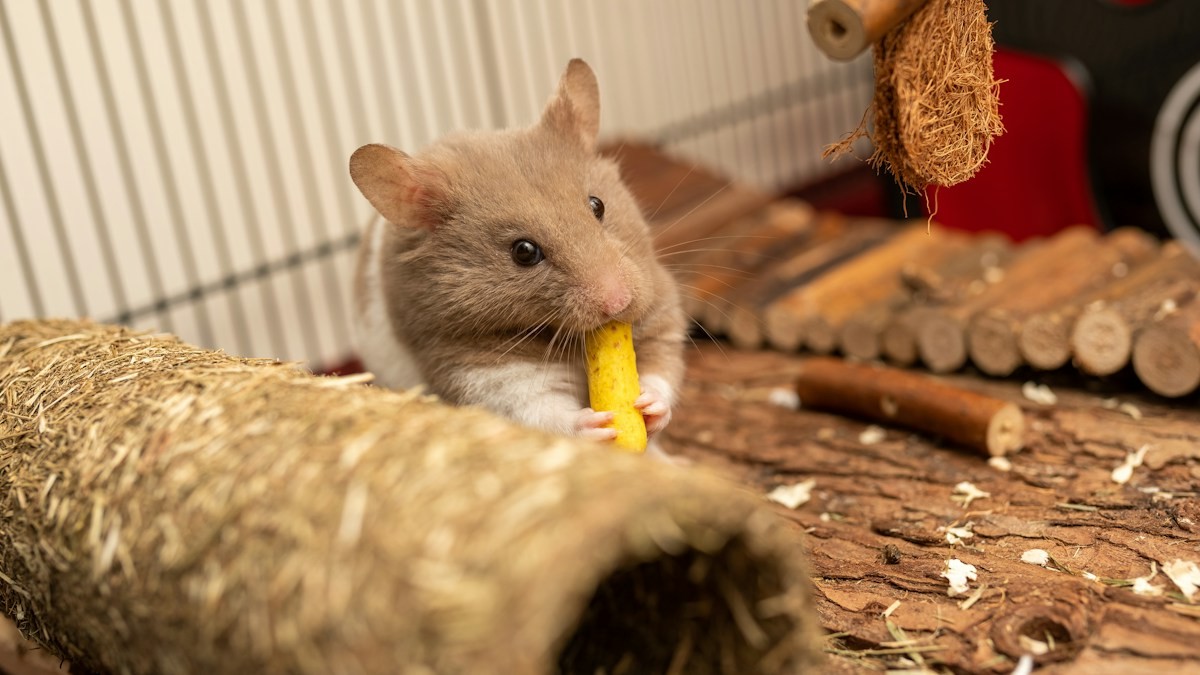
Species-Appropriate Hamster Habitat Standards
| Hamster Species | Minimum Floor Space (Unbroken) | Bedding Substrate Depth | Upright Wheel Diameter | Sand Bath Requirement |
|---|---|---|---|---|
| Syrian Hamster (Male) | Minimum 775 sq in (100 x 50 cm) | 10 to 12 Inches (25-30 cm) | Minimum 11-12 Inches (28-30 cm) | Large dish with sterilized quartz sand |
| Syrian Hamster (Female) | Minimum 1,000+ sq in (120 x 50 cm) | 12+ Inches (30 cm) | Minimum 12 Inches (30 cm) | Deep sand zone for grooming & digging |
| Roborovski Dwarf | Minimum 775 sq in (100 x 50 cm) | 8 to 10 Inches (20-25 cm) | Minimum 8 Inches (20 cm) | At least 1/3 of enclosure footprint in sand |
| Campbell / Winter White | Minimum 775 sq in (100 x 50 cm) | 8 to 10 Inches (20-25 cm) | Minimum 9 to 10 Inches (22-25 cm) | Shallow sand bath for pelt degreasing |
| Pet Store Modular Cage | < 300 sq in (INADEQUATE) | < 2 Inches (INADEQUATE) | 5.5 – 6.5 Inches (CAUSES SPINAL DEFORMITY) | None (Unsanitary plastic tubes) |
Recommended Further Reading & Authoritative References
To deepen your understanding of these systems, review our companion analysis on DIY Naturalistic Hamster Enclosures and Hamster Sand Baths Guide. For official technical specifications and industry standards, consult the The Hamster Forum Welfare & Housing Standards.
Preventative Health Protocols & Environmental Quality Standards
Maintaining optimal wellbeing when implementing Complete Syrian and Dwarf Hamster Habitat Guide requires consistent observation and strict environmental quality control. Small animals and aquatic species possess sensitive respiratory and metabolic systems that react rapidly to subtle micro-environmental shifts.
Establish a regular sanitation schedule using only pet-safe, non-toxic cleaning agents free from volatile synthetic fragrances. For aquatic habitats, conduct weekly multi-parameter water tests measuring ammonia, nitrite, and nitrate levels to preserve established biological filtration.
Conduct daily behavioral evaluations during feeding routines. Early identification of appetite variations, altered posture, or changes in grooming habits enables immediate, low-stress interventions before minor concerns develop into urgent veterinary conditions.
Frequently Asked Questions
Can two dwarf hamsters live together in the same cage?
All hamster species (including Syrians and Dwarfs) are fundamentally solitary and territorial in captivity. While wild dwarfs live in temporary colonies, captive pairs almost invariably turn on each other, resulting in horrific fights and fatal injuries. Always house hamsters strictly one per cage.
How often should I clean a large 775+ square inch hamster enclosure?
Never do 100% full cage cleanouts! Complete bedding removals strip away familiar scent markings, causing severe psychological distress. With 10+ inches of bedding, simply ‘spot-clean’ soiled sand and pee corners every few days, and perform partial cleanouts (replacing only 1/3 of the bedding) every 2 to 3 months.
Are clear plastic exercise balls safe for hamsters to run in outside the cage?
No! Hamster exercise balls are dangerous and stressful. They have poor ventilation, cause heat exhaustion, distort the hamster’s vision, and trap the animal without access to water or hiding spots. Use an enclosed fabric playpen instead.
Why is a sand bath mandatory for dwarf hamsters?
Hamsters must never be bathed in water (water strips natural oils from their coat, causing fatal hypothermia). A dish of calcium-free sterilized sand allows them to roll and groom, removing excess oils and keeping their pelt sleek and clean.