



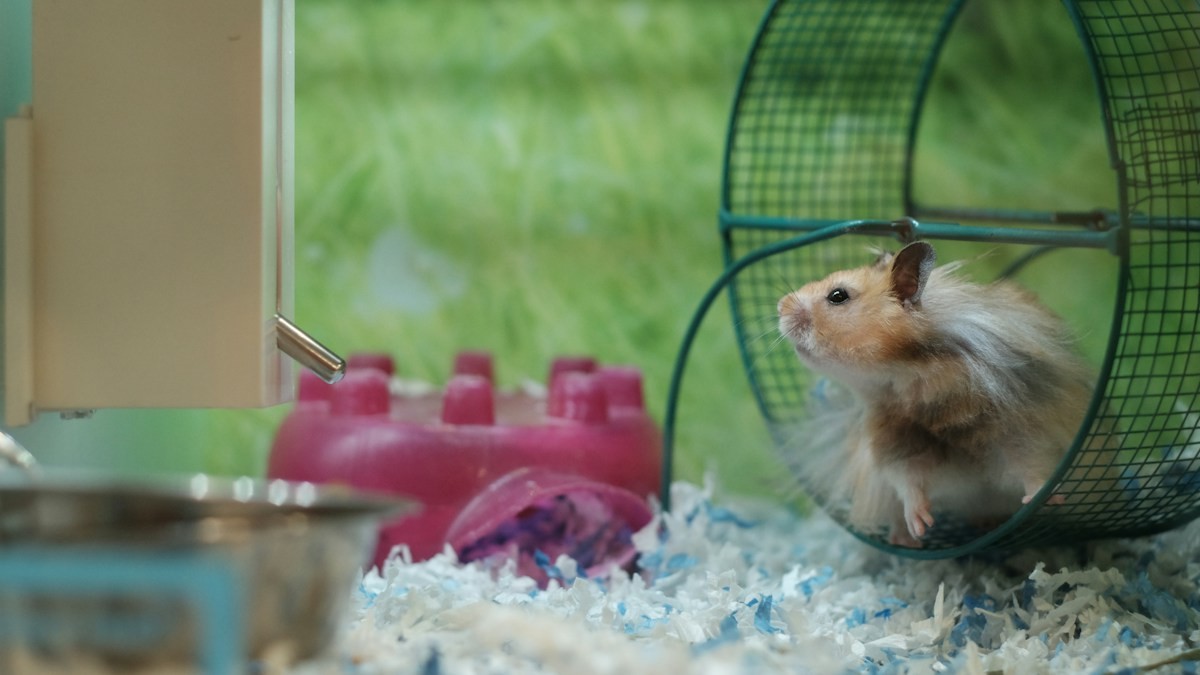
Providing adequate living space is the single most critical decision in small rodent welfare. For decades, commercial pet stores have marketed diminutive plastic wire cages with brightly colored tubes as suitable enclosures for Syrian hamsters (*Mesocricetus auratus*). However, modern veterinary science and animal behavior research have thoroughly debunked these outdated products, establishing that undersized habitats induce severe psychological stereotypic behaviors, including chronic bar chewing, frantic wall climbing, and extreme territorial aggression.
In their native arid grasslands of northern Syria and southern Turkey, solitary Syrian hamsters occupy expansive underground burrow systems extending up to a meter beneath the surface, patrolling territory spanning hundreds of square meters every night. Confining an animal with such intense foraging and burrowing instincts to a cramped commercial cage severely restricts their natural biomechanics and emotional wellbeing.
This definitive veterinary guide explores the exact parameters required for ethical hamster husbandry. We examine unbroken continuous floor space calculations, vertical depth for structurally stable burrows, ventilation requirements, and why investing in proper syrian hamster cage size prevents expensive veterinary complications and behavioral distress.
Scientific Floor Space Standards: Why Continuous Footprint Matters
Understanding the fundamental distinction between unbroken floor area and modular platform space.
The 100x50cm Continuous Surface Mandate
Modern rodent welfare organizations, including the Veterinary Association for Animal Welfare (Tierärztliche Vereinigung für Tierschutz – TVT), establish an absolute minimum unbroken floor footprint of 100cm by 50cm, providing 5,000 square centimeters (approximately 775 square inches) of continuous base area. This space must be completely open and uninterrupted by dividing walls, ramps, or narrow connector tubes.
Commercial manufacturers frequently advertise modular cages by calculating the cumulative surface area of second and third-story plastic shelves. In ethological reality, hamsters are ground-dwelling, subterranean foragers that do not benefit from vertical climbing space; multi-tier platforms do not count toward baseline floor area and pose severe fall hazards for animals with limited depth perception.
Stereotypic Behaviors Caused by Spatial Restriction
When housed in enclosures below 5,000 square centimeters, Syrian hamsters reliably exhibit stereotypic bar biting—a repetitive stress response driven by frustration and escape attempts. Chronic bar chewing causes dental malocclusion, shattered incisors, and traumatic facial lacerations requiring surgical intervention.
Furthermore, cage-aggression is overwhelmingly a direct symptom of claustrophobia. Hamsters that display lunging, hissing, or biting behaviors inside undersized commercial cages frequently transform into placid, docile companions within 48 hours of transitioning into a proper spacious tank or customized wooden terrarium.
Bedding Depth Physics and Underground Burrow Architecture
How vertical substrate depth satisfies the primary biological drive of Syrian hamsters.
Substrate Density and Structural Tunnel Integrity
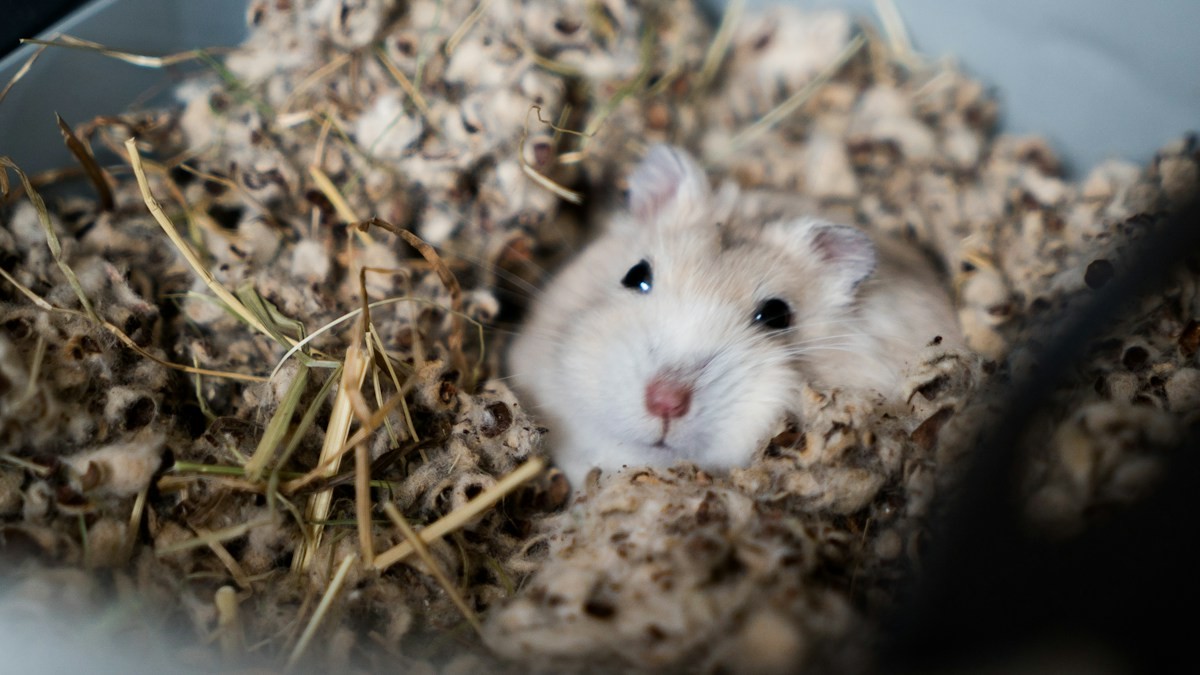
In the wild, hamsters spend daytime hours sleeping deep inside subterranean tunnel chambers protected from extreme desert temperatures and surface predators. To recreate these conditions in captivity, an enclosure must accommodate at least 25 to 30 centimeters (10 to 12 inches) of compressed, burrow-safe substrate.
Achieving stable burrows requires layering high-density paper-based bedding (such as unscented Kaytee Clean & Cozy) with alternating strata of soft orchard grass or timothy hay. The fibrous plant stalks provide structural tensile strength, preventing underground chambers from collapsing under the hamster’s weight.
Multi-Chamber Sleeping Hide Placement
Subterranean burrows naturally feature separate chambers dedicated to sleeping, food hoarding, and elimination. Placing a bottomless, wooden multi-chamber hideout directly on the lowest floor of the cage—underneath the bedding column—allows the hamster to establish a natural underground nest box without disturbing the surface topography.
Because hamsters prefer to eliminate in designated sand baths, integrating a specialized granite or ceramic sand dish inside one compartment of the multi-chamber hide simplifies spot-cleaning while keeping the primary nest hygienic.
Ventilation, Escape Prevention, and Habitat Conversion Options
Evaluating aquariums, converted wardrobes, and DIY wooden terrariums.
Glass Aquariums vs Converted IKEA Enclosures
Standard 75-gallon or 90-gallon glass aquariums make exceptional hamster habitats, offering continuous unobstructed floor space, thick tempered glass impervious to chewing, and sufficient vertical depth for 30cm of bedding. A custom wire mesh lid constructed from 1/4-inch galvanized hardware cloth ensures optimal airflow while preventing escapes.
For cost-effective DIY builders, repurposing flat-pack furniture like the IKEA Linnmon desk or Pax wardrobe into a melamine-sealed enclosure delivers over 8,000 square centimeters of space at a fraction of commercial glass aquarium prices. Exposed silicone edges and inner wooden corners must be shielded with aluminum angle brackets to prevent chewing escape holes.
Wheel Clearance and Overhead Height
Adult Syrian hamsters require an upright, solid-running exercise wheel with a diameter between 28cm and 32cm (11 to 12 inches) to prevent severe spinal curvature. Enclosures must feature an overall vertical height of at least 50cm to 60cm to accommodate both the massive wheel and a deep bedding basin without restricting wheel rotation.
Never compromise wheel diameter to fit an undersized enclosure. Running with an arched spine causes irreversible degenerative disc disease and chronic pain, significantly shortening a rodent’s natural lifespan.
Enclosure Type Comparison & Welfare Evaluation
| Enclosure Type | Continuous Floor Space | Bedding Depth Capacity | Escape & Chew Risk | Veterinary Rating |
|---|---|---|---|---|
| Commercial Wire Cage | 1,800 – 2,500 sq cm | 5 – 8 cm (Inadequate) | High (Bar biting, falls) | Fails Basic Welfare |
| 75-Gallon Glass Tank | 4,800 – 5,200 sq cm | 25 – 30 cm (Excellent) | Zero (Chew-proof walls) | Approved Minimum |
| IKEA Linnmon DIY Cage | 7,000 – 8,500 sq cm | 30 – 35 cm (Optimal) | Low (With edge guards) | Gold Standard |
| Prevue 528 Wire Cage | 3,900 sq cm | 12 – 15 cm (Borderline) | Medium (Plastic base) | Conditional Minimum |
Recommended Further Reading & Authoritative References
To deepen your practical mastery of these concepts, explore our comprehensive analyses on natural foraging sprays and boredom breakers and custom DIY rodent cage construction techniques. For official technical standards, peer-reviewed benchmarks, and industry guidelines, consult the RSPCA Official Hamster Housing and Welfare Standards.
Comprehensive Husbandry Audit & Long-Term Management Protocols
Implementing these techniques successfully over extended periods requires continuous observation and systematic environmental auditing. Experienced caregivers recognize that baseline standards must be dynamically adapted to suit the unique physical health, temperament, and behavioral responses of each animal. By maintaining a structured weekly health and habitat observation log, you can identify subtle physiological shifts early, ensuring that your companion pet enjoys a sustained quality of life characterized by comfort, mental stimulation, and exceptional vitality.
Furthermore, maintaining strict adherence to validated veterinary guidelines prevents the subtle onset of chronic illness or psychological distress. Regularly verifying structural integrity, nutritional bioavailability, and hygienic thresholds safeguards your habitat against environmental hazards. When you invest the effort to design and maintain a meticulously curated living space, you establish an enduring standard of care that promotes thriving longevity and deep, enriching companion bonding.
Frequently Asked Questions
Why do commercial pet shops still sell tiny cages if they harm hamsters?
Retail pet chains prioritize manufacturing margins, store shelf efficiency, and impulse purchasing. Traditional cages are cheap to package and market toward children, despite being widely condemned by veterinary associations and ethical welfare groups globally.
Can I connect two smaller cages with plastic tubes to meet the floor space requirement?
No. Hamsters require contiguous, unbroken floor space to run, dig, and navigate naturally. Modular tubes trap ammonia fumes, become territorial choke points, and prevent the construction of deep, uninterrupted underground burrow systems.
How often should I clean a 100x50cm hamster habitat with deep bedding?
Large habitats with 25-30cm of bedding require only spot-cleaning every 3 to 4 days (removing soiled sand and damp corner bedding). Full substrate replacements should only be performed every 6 to 8 weeks, retaining one-third of clean bedding to preserve familiar scent markers.
Is plastic mesh or chicken wire acceptable for building an enclosure lid?
No. Hamsters can effortlessly chew through plastic mesh in minutes. Use heavy-gauge 1/4-inch or 1/2-inch galvanized steel welded hardware cloth firmly stapled or bolted to a rigid wooden frame.