





Among the domesticated dwarf hamster species, the Roborovski hamster (*Phodopus roborovskii*) is celebrated for its diminutive size, lightning-fast agility, and distinctive white eyebrow tufts. For decades, pet store marketing and outdated literature have promoted the pervasive myth that Roborovski hamsters are ‘social animals’ that thrive best when housed in bonded pairs or small sibling colonies. Every year, thousands of well-meaning pet parents purchase sibling pairs under the false assumption that a solitary hamster will suffer from loneliness.
In behavioral reality, captive pair housing represents one of the most hazardous and anxiety-inducing practices in modern rodent husbandry. While wild Roborovskis in the boundless gravel deserts of northern China and Mongolia may share loose family burrow complexes during harsh winter months or resource shortages, they are fundamentally facultative socialites. In the wild, when reproductive competition or territorial friction arises, a submissive individual simply disperses across kilometers of open desert to establish its own independent territory.
Trapped inside the artificial confines of a domestic cage—regardless of how spacious—dispersal is physically impossible. Minor territorial spats inevitably escalate into violent ‘declanning’ battles resulting in horrific facial mutilation, severed limbs, and fatal maulings. This veterinary ethology guide dissects roborovski hamster social dynamics, detailing early behavioral warning signs of social breakdown, resource guarding mechanics, and emergency separation protocols.
The Myth of Captive Hamster Sociality: Ethology vs Pet Shop Marketing
Why wild survival adaptations do not translate into peaceful domestic co-habitation.
Facultative Tolerance vs Obligate Pack Animals
True social animals—such as dogs, rats, or guinea pigs—are obligate socialites whose physiological and psychological health depends upon complex herd interactions and social grooming. Hamsters, by contrast, possess no emotional need for companionship. In their desert homeland, solitary existence is the default baseline; adults come together transiently solely for mating purposes before immediately parting ways.
Juvenile sibling Roborovskis frequently live peacefully together until reaching sexual maturity between three and five months of age. At this juncture, hormonal surges trigger intense territorial resource defense, turning former littermates into mortal rivals.
The Trap of Artificial Enclosure Confinement
In an indoor habitat, even an expansive 100cm by 50cm enclosure cannot simulate natural desert dispersal distances. The subordinate hamster is trapped in constant visual, olfactory, and auditory proximity to the dominant aggressor.
This triggers chronic, unrelenting systemic stress, causing catastrophic elevations in adrenocortical hormones, immunosuppression, severe digestive disorders, and a drastically shortened lifespan even before physical violence erupts.
Recognizing Early Warning Signs of Declanning and Bullying
Subtle behavioral cues that precede fatal territorial warfare.
Resource Monopoly and Wheel Guarding
Violence in hamsters rarely occurs without extensive prelude. The earliest indicator of social breakdown is resource monopolization. The dominant hamster will typically position its body directly inside or atop the running wheel, sleeping there to prevent the subordinate animal from exercising.
Similarly, the aggressor will stand guard over the main food dish or water bottle, lunging and squeaking whenever the submissive partner attempts to feed. The victim will display noticeable weight loss, a dull ruffled coat, and spend hours hiding shivering in deep substrate.
Physical Injuries: The Rump and Ventral Scent Gland
When fighting escalates, physical attacks follow a predictable anatomical pattern. Hamsters naturally flee by running away, meaning that initial bite wounds are concentrated on the rump, tail area, and hind legs of the retreating animal.
Furthermore, the aggressor will target the victim’s ventral scent gland (located on the abdomen), aiming to eradicate its rival’s chemical identity. If you observe dried scabs, fur loss on the lower back, or swollen red bite punctures during weekly health exams, declanning has begun and immediate action is required.
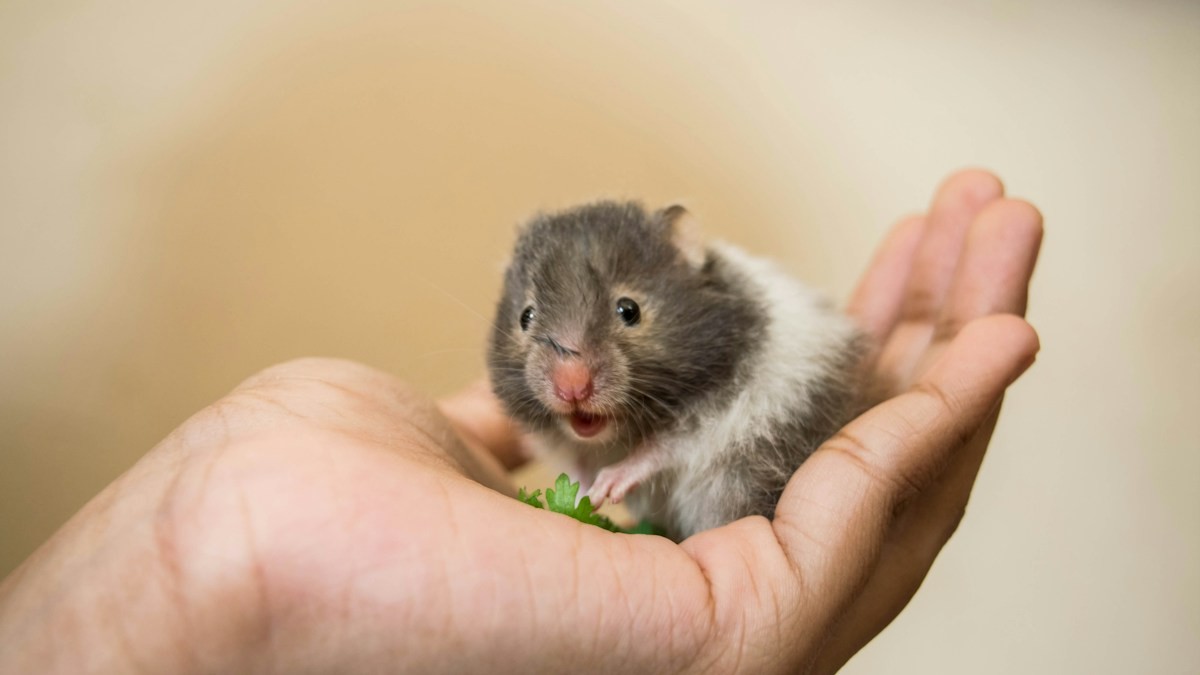
Emergency Separation and Permanent Solo Husbandry Protocol
How to execute an immediate divide and why reintroduction must never be attempted.
The Immediate Separation Mandate
The moment fighting, persistent chasing, or physical injury is observed, the hamsters must be separated immediately into two completely independent, self-contained habitats. Never attempt ‘time-outs’ or assume they will work out their differences; in rodent behavior, a broken social bond can never be repaired.
Every owner housing a pair of dwarf hamsters must maintain a fully equipped, spare backup habitat (such as a 50-gallon clear storage bin cage with mesh lid, extra wheel, water bottle, and hideout) on standby from day one.
The Transformation of Solitary Housing
Many owners experience guilt upon separating pairs, worrying that their hamsters will feel lonely. In reality, the transformation following separation is immediate and profound: both the bullied victim and the stressed dominant animal visibly relax, explore their enclosures peacefully, and gain healthy weight.
Living solo eliminates fear of attack, protects food hoards, and allows each Roborovski to live out its 2-to-3-year lifespan in absolute peace and tranquility.
Roborovski Social Behavior & Co-Housing Hazard Breakdown
| Housing Strategy | Declanning Probability | Stress / Cortisol Level | Injury / Mortality Risk | Veterinary Verdict |
|---|---|---|---|---|
| Solitary (1 Hamster per cage) | 0% (Impossible) | Lowest (Baseline calm) | 0% (Zero fighting) | Gold Standard (Ethical & Safe) |
| Sibling Pair (2 littermates) | 85% – 95% by 12 months | High to Severe | Extremely High (Fatal bites) | Strongly Discouraged |
| Unrelated Pair / Rescues | 99% within 48 hours | Extreme / Lethal | Virtually Guaranteed Fatal | Strictly Prohibited |
| Small Colony (3+ hamsters) | 100% within months | Maximum / Panic | Severe Cannibalism Risk | Inhumane / Extreme Hazard |
Recommended Further Reading & Authoritative References
To deepen your practical mastery of these concepts, explore our comprehensive analyses on veterinary minimum enclosure standards and habitat spatial design and dwarf hamster sand bath requirements and stress-reducing setups. For official technical standards, peer-reviewed benchmarks, and industry guidelines, consult the The Hamster Forum Ethology Guide: Can Hamsters Live Together?.
Comprehensive Husbandry Audit & Long-Term Management Protocols
Implementing these techniques successfully over extended periods requires continuous observation and systematic environmental auditing. Experienced caregivers recognize that baseline standards must be dynamically adapted to suit the unique physical health, temperament, and behavioral responses of each animal. By maintaining a structured weekly health and habitat observation log, you can identify subtle physiological shifts early, ensuring that your companion pet enjoys a sustained quality of life characterized by comfort, mental stimulation, and exceptional vitality.
Furthermore, maintaining strict adherence to validated veterinary guidelines prevents the subtle onset of chronic illness or psychological distress. Regularly verifying structural integrity, nutritional bioavailability, and hygienic thresholds safeguards your habitat against environmental hazards. When you invest the effort to design and maintain a meticulously curated living space, you establish an enduring standard of care that promotes thriving longevity and deep, enriching companion bonding.
Frequently Asked Questions
Why did my two baby dwarf hamsters sleep together peacefully for the first two months?
Juvenile hamsters rely on shared body heat and littermate familiarity before their reproductive hormones develop. As they reach sexual maturity between 3 and 5 months, their natural territorial defense triggers, prompting territorial fighting.
If I provide two wheels, two food bowls, and two water bottles, can I keep a pair?
Duplicating resources reduces immediate choke points, but it cannot prevent territorial conquest. The dominant hamster will simply claim BOTH wheels and BOTH bowls, aggressively attacking the submissive partner when it approaches either one.
Do female dwarf hamsters fight as violently as male pairs?
Yes! In fact, female dwarf hamsters undergo estrus heat cycles every four days, causing massive hormonal spikes that often make female-female declanning even more violent and sudden than male pairs.
Can a separated hamster ever be reintroduced after a cooling-off period?
Never. Once separated, hamsters lose their shared scent markers within 24 to 48 hours. Reintroducing them is perceived as a foreign enemy invading their territory, resulting in instantaneous, vicious fighting.