



Guinea pigs (*Cavia porcellus*) are delightful, vocal, and affectionate companion animals. Yet, exotic veterinarians consistently report that over 75% of clinical health emergencies in guinea pigs—including lethal gastrointestinal stasis (GI stasis), painful dental malocclusions, urinary bladder stones, and scurvy—are directly attributable to improper nutrition. Unlike omnivorous rodents like mice or rats, guinea pigs are obligate, hindgut-fermenting herbivores with delicate digestive ecosystems.
A guinea pig’s digestive tract is engineered to process massive quantities of low-energy, high-fiber grasses continuously throughout the day. If their gastrointestinal tract ceases moving for even twelve hours, beneficial cecal bacteria die off, dangerous endotoxins flood the bloodstream, and the animal enters life-threatening GI stasis. Furthermore, guinea pigs share a rare genetic mutation with humans: they completely lack the enzyme required to synthesize their own Vitamin C.
In this comprehensive veterinary nutrition guide, we present the ultimate guinea pig diet guide. You will learn how to select premium long-stem grass hays, calculate precise daily Vitamin C requirements, curate safe daily vegetable rotations, and eliminate dangerous commercial feed mixes that threaten your pet’s life.
The Foundation: Why Long-Stem Grass Hay is 80% of Life
Hay is not an optional bedding accessory; it is the absolute biological foundation of a guinea pig’s physical survival.
Hindgut Fermentation and Peristalsis
Guinea pigs rely on a specialized digestive organ called the cecum—a large fermentation vat filled with millions of symbiotic microflora that ferment indigestible fiber into absorbable volatile fatty acids.
Long-stem crude fiber (indigestible fiber strands) stimulates continuous peristaltic contractions in the intestines. Without a continuous supply of fibrous hay passing through the gut, digestion slows, painful gas builds, and fatal gut stasis ensues.
Continuous Dental Abrasion of Open-Rooted Molars
A guinea pig’s front incisors, premolars, and deep molars grow continuously. Chewing on pellets or soft vegetables barely wears down teeth.
The high silica content of long-stem grass hay acts like fine sandpaper: the side-to-side chewing motion grinds opposing dental crowns against each other, preventing painful molar spurs that lacerate the tongue and cheeks.
Timothy Hay vs. Alfalfa Hay: The Calcium Hazard
Adult guinea pigs (over 6 months of age) must be fed grass hays like 2nd-cut Timothy hay, Orchard grass, or Meadow hay. Never feed adult guinea pigs Alfalfa hay.
Alfalfa is a legume rich in calcium and protein designed only for nursing mothers and pups under six months. Excess calcium in adult pigs cannot be processed and precipitates in the bladder, forming excruciating calcium carbonate bladder stones that require emergency surgical extraction.
The Vitamin C Imperative: Dosing and Sources
Due to a genetic defect in the L-gulonolactone oxidase enzyme, guinea pigs cannot manufacture Vitamin C (ascorbic acid) and must ingest it daily.
Daily Dosage Requirements: Maintenance vs. Illness
A healthy adult guinea pig requires 10 to 30 milligrams of Vitamin C per kilogram of body weight every single day. Growing pups, pregnant sows, and sick or recovering pigs require up to 50 milligrams daily.
Deficiency leads to scurvy within 10 to 14 days, manifesting as swollen, painful joints, lethargy, bleeding gums, rough coat texture, and eventual death.
The Myth of Water Bottle Vitamin C Drops
Never add liquid Vitamin C drops to your guinea pig’s water bottle! Ascorbic acid degrades rapidly when exposed to light and oxygen, losing 50% of its potency within four hours. Furthermore, Vitamin C alters the taste of the water, causing many pigs to refuse drinking and become severely dehydrated.
Deliver Vitamin C directly via fresh high-C vegetables (like bell peppers) or chewable stabilized Vitamin C tablets (such as Oxbow Natural Science Vitamin C).
The Fresh Vegetable Salad: Safe Rotations vs. Dangerous Foods
Provide one packed measuring cup of fresh, washed raw vegetables per guinea pig every single day.
Daily Safe Staples
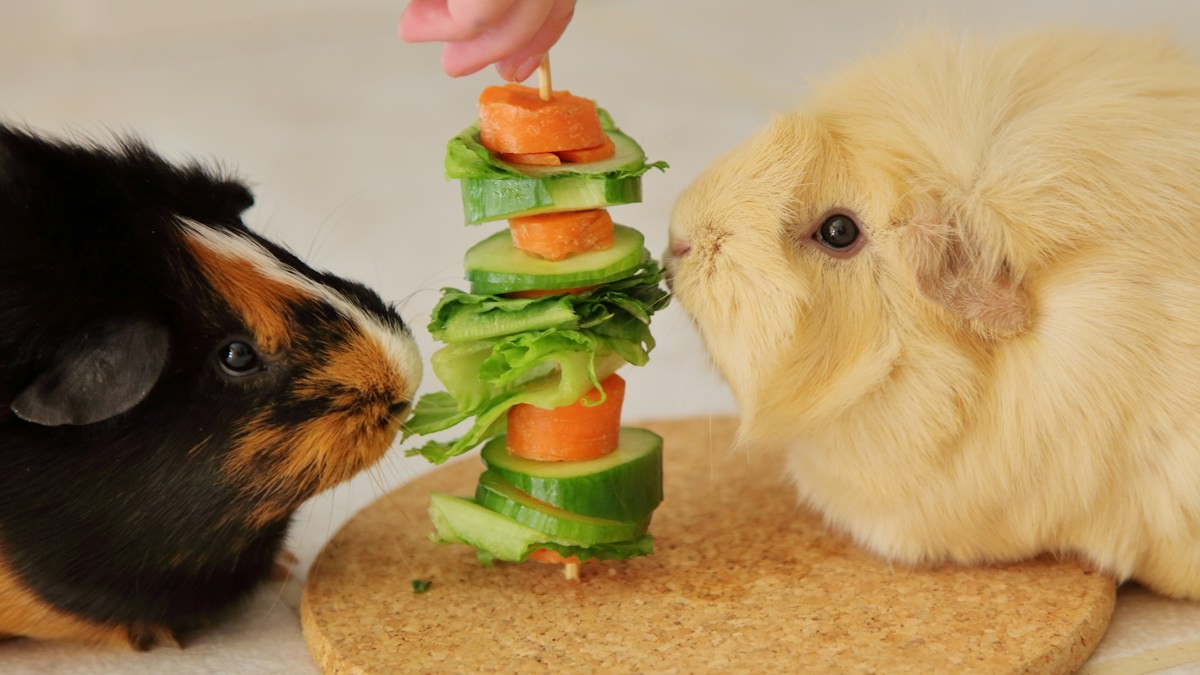
Build your daily salad around fresh leafy greens: green leaf lettuce, red leaf lettuce, Romaine (in moderation), and fresh cilantro. Add one-eighth of a fresh sweet bell pepper (yellow, red, or green) daily—bell peppers are nature’s most concentrated, low-sugar source of Vitamin C.
Incorporate small quantities of zucchini, cucumber slices (for hydration), and fresh fennel.
Foods That Must Be Strictly Prohibited
Never feed iceberg lettuce (contains zero nutrition and high lactucarium, causing watery diarrhea). Avoid potatoes, onions, garlic, tomato stems and leaves (toxic solanine), avocado (toxic persin), and rhubarb (lethal oxalic acid).
Eliminate commercial ‘muesli’ pellet mixes containing colorful seeds, nuts, and dried corn: seeds are severe choking hazards and high fat content damages liver function.
Guinea Pig Nutritional Pyramid & Dietary Percentages
| Dietary Component | Percentage of Total Diet | Daily Serving Recommendation | Key Biological Function | Common Dangerous Mistake |
|---|---|---|---|---|
| Long-Stem Grass Hay (Timothy) | 80% – 85% of Daily Diet | Unlimited, continuous fresh supply | Peristaltic gut motility & molar grinding | Feeding high-calcium Alfalfa hay to adults |
| Fresh Safe Vegetables | 10% – 15% of Daily Diet | 1 packed cup per guinea pig daily | Bioavailable Vitamin C, hydration, minerals | Feeding iceberg lettuce (causes diarrhea) |
| Fortified Timothy Pellets | 5% of Daily Diet | 1 to 2 tablespoons per pig daily | Trace minerals & stabilized Vitamin C | Feeding muesli mixes with nuts, seeds, colored bits |
| Clean Dechlorinated Water | Essential Lifeline | 100 – 300 ml daily per adult | Kidney flushing & metabolic hydration | Adding liquid vitamin C drops to water bottles |
| Fresh Fruit / High-Sugar Treats | < 1% (Occasional treat) | A single blueberry or thin apple slice 1x/wk | Positive enrichment & bond training | Daily fruit feeding causing cecal bacterial dysbiosis |
Recommended Further Reading & Authoritative References
To deepen your understanding of these systems, review our companion analysis on Vitamin C Deficiencies in Guinea Pigs and Understanding Guinea Pig Vocalizations. For official technical specifications and industry standards, consult the Oxbow Animal Health Veterinary Small Herbivore Nutrition.
Preventative Health Protocols & Environmental Quality Standards
Maintaining optimal wellbeing when implementing Ultimate Guinea Pig Diet Guide requires consistent observation and strict environmental quality control. Small animals and aquatic species possess sensitive respiratory and metabolic systems that react rapidly to subtle micro-environmental shifts.
Establish a regular sanitation schedule using only pet-safe, non-toxic cleaning agents free from volatile synthetic fragrances. For aquatic habitats, conduct weekly multi-parameter water tests measuring ammonia, nitrite, and nitrate levels to preserve established biological filtration.
Conduct daily behavioral evaluations during feeding routines. Early identification of appetite variations, altered posture, or changes in grooming habits enables immediate, low-stress interventions before minor concerns develop into urgent veterinary conditions.
Frequently Asked Questions
Can guinea pigs eat unlimited commercial pellets?
No! Limit plain, fortified Timothy grass pellets to 1 to 2 tablespoons per adult pig daily. Overfeeding pellets causes obesity, reduces the pig’s appetite for vital hay, and increases urinary calcium stone risks.
How often can I feed fresh fruits like strawberries or apples?
Fruit should be treated strictly as an occasional treat (once or twice a week, in a portion size no larger than a postage stamp). The high fructose content in fruit disrupts the delicate alkaline pH of the cecum, causing bacterial blooms.
What should I do if my guinea pig stops eating hay for 12 hours?
Treat this as an immediate medical emergency! A guinea pig that stops eating is entering GI stasis. Begin syringe-feeding recovery formula (such as Critical Care) and consult an exotic animal veterinarian immediately.
Can I feed fresh grass picked from my outdoor lawn?
Yes, fresh hand-picked grass is beloved by guinea pigs. However, only harvest grass that is 100% free of chemical pesticides, weed killers, and dog/cat fecal contamination. Never feed lawnmower clippings, as mechanical heat initiates rapid anaerobic fermentation.